

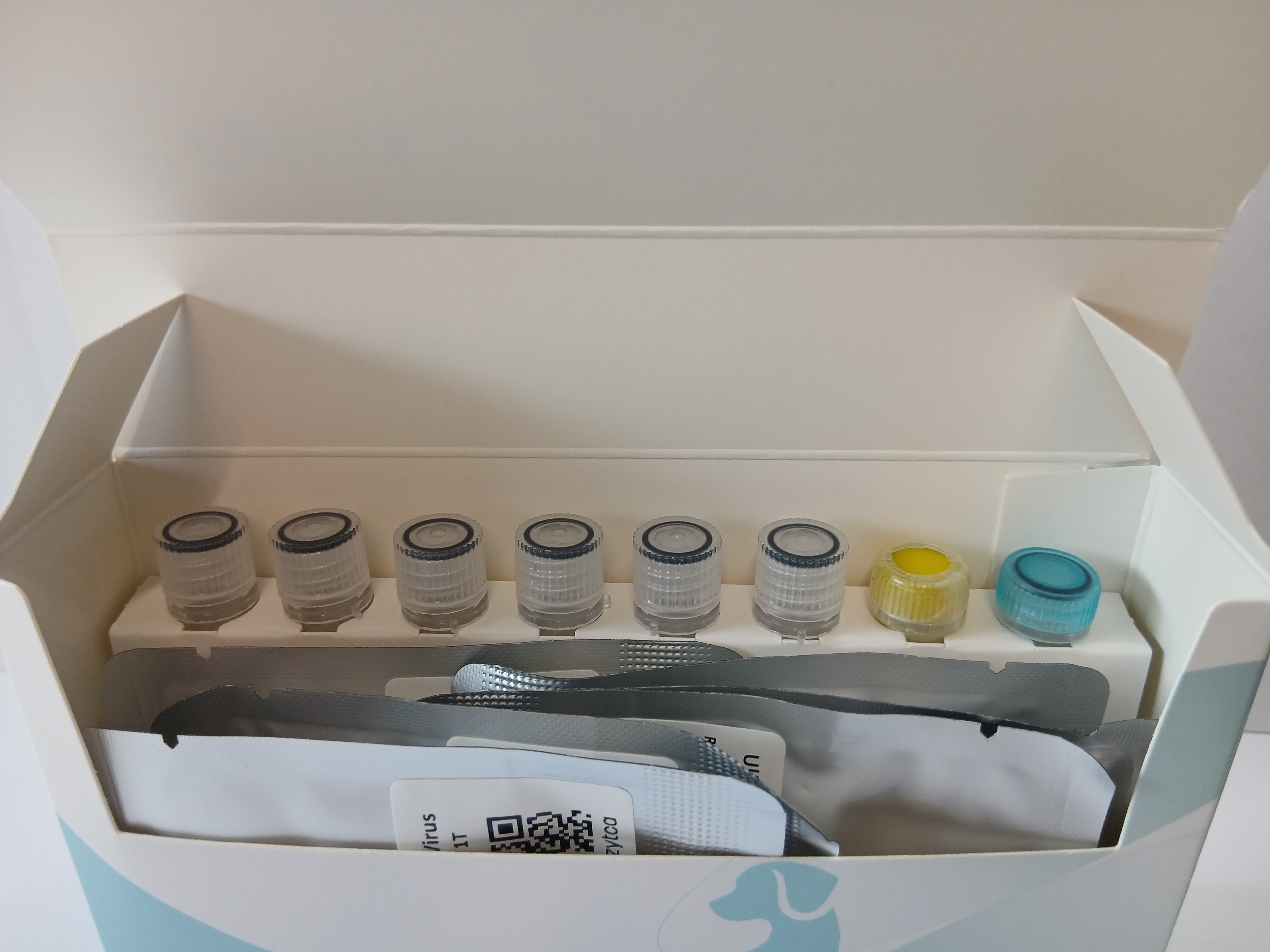

Description
In dogs,Brucella canis infection is a chronic, often subclinical venereal disease that primarily affects the reproductive system, but can also cause systemic signs. Many infected dogs show no obvious illness but can still transmit the bacteria to other dogs and people. In females, the most common signs are lateterm abortion (usually around 45–55 days of gestation), stillbirth, weak or dying puppies, placentitis, and metritis; infertility and failure to conceive are also frequent.
In males, B. canis causes epididymitis, prostatitis, and orchitis, leading to infertility, enlarged or painful testicles in acute cases, and testicular atrophy in chronic infection. Systemic signs, when present, include lethargy, weight loss, anorexia, generalized lymphadenopathy, lameness, back pain (due to discospondylitis), and occasionally uveitis, neurologic deficits, or renal involvement.
To confirm Brucella canis infection, serum is the primary sample for serologic testing (rapid slide agglutination test, tube agglutination test, or ELISA) to detect antibodies; a positive screening test should be confirmed with a more specific test (e.g., agar gel immunodiffusion, PCR, or culture) because false positives can occur. Blood (EDTA) can be submitted for PCR to detect B. canis DNA, which is especially useful in early infection or in dogs with equivocal serology.
In breeding dogs, additional samples such as semen (males), vaginal swabs, or aborted foetuses/placental material can be tested by PCR or culture to identify shedding animals. Quantitative PCR (qPCR) on blood, semen, or reproductive tissues allows sensitive detection and quantification of B. canis DNA, helping to confirm active infection, monitor response to treatment, and assess shedding risk, although infection is often considered lifelong even with antimicrobial therapy.