
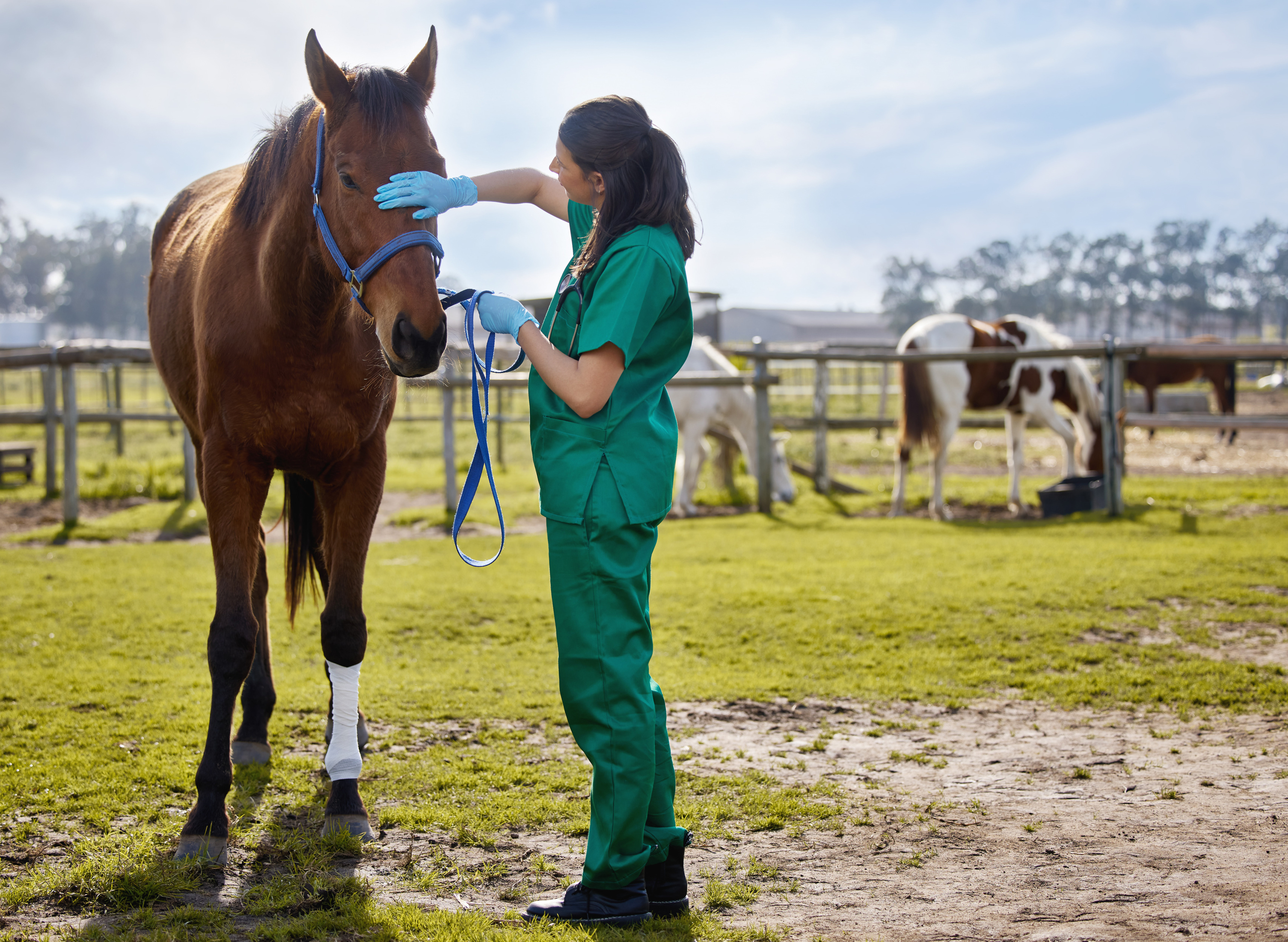

Neurotropic equine herpesvirus-1 (EHV‑1) is a major cause of equine herpes myeloencephalopathy (EHM), an often devastating neurologic disease that has significant welfare and economic implications for the global horse industry. Neurotropic strains can trigger outbreaks of paralysis, ataxia, and, in severe cases, death, making rapid and accurate diagnosis essential for biosecurity and outbreak control.
Importance of neurotropic EHV‑1
Neurotropic EHV‑1 strains typically arise from specific genetic variants in the viral DNA polymerase gene (ORF30), historically associated with an amino acid change (N752→D752) that increases the risk of central nervous system invasion and neurologic disease. Although newer surveillance data show that both “neuropathogenic” and “non‑neuropathogenic” genotypes can be found in EHM cases, the concept of neurotropic variants remains clinically important because these strains are linked with higher viremia, more efficient vascular infection, and greater likelihood of spinal cord and brain involvement.
Outbreaks of EHM have led to temporary closure of equine events, movement restrictions, and costly quarantine measures, underlining the need for early detection and strict infection control. In addition, EHV‑1 is ubiquitous, establishes lifelong latency, and can reactivate under stress, so even a single neurotropic infection within a herd can act as a reservoir for future neurologic disease events.
Role of PCR in diagnosis
Polymerase chain reaction (PCR), particularly real‑time PCR, is the recommended frontline test for detecting EHV‑1 nucleic acid in nasal swabs and blood from clinically affected or exposed horses. International guidelines identify PCR as the standard method for confirming EHV‑1 (and EHV‑4) infection during outbreaks, because it offers high analytical sensitivity, rapid turnaround, and the ability to detect virus before or in the absence of clear serologic responses.
Modern multiplex real‑time PCR assays can simultaneously distinguish EHV‑1 from other equine respiratory pathogens and from closely related herpesviruses, and may detect as few as a handful of viral genome copies per reaction. Additional PCR formats using allelic discrimination at the ORF30 SNP site allow laboratories to differentiate putative neuropathogenic and non‑neuropathogenic EHV‑1 variants, providing useful epidemiological information even though genotype alone does not perfectly predict clinical outcome.
UK-specific disease surveillance
UK equine disease surveillance, such as quarterly updates and newsletters from veterinary sources, notes elevated EHV-1 risks in early 2025, consistent with winter-spring trends, though not always tied to a single peak month. While EHV-1 is endemic year-round due to latency in 80-90% of UK horses, clinical outbreaks and neurologic forms are more frequently reported when horses are stabled closely, as in winter.
Practical diagnostic applications
In practice, PCR is used to:
- Confirm EHV‑1 as the cause of fever, respiratory signs, abortion, or neurologic deficits in individual horses, guiding isolation and treatment decisions.
- Screen in-contact horses during an outbreak to identify subclinically infected animals, support movement restrictions, and monitor the effectiveness of biosecurity and quarantine measures.
Because EHV‑1 becomes latent, a negative PCR result later in the course of disease or in convalescent animals does not exclude prior infection, so PCR is often interpreted alongside clinical findings and, when indicated, paired serology. Nonetheless, for acute neurotropic EHV‑1 infection, PCR remains the cornerstone of early diagnosis and a critical tool for limiting spread in equine populations.
At Zytca Animal Health, we have developed PCR technology that can accurately diagnose EHV1 and EHV4 as well as discriminate potentially neuropathogenic strains of the virus. To find out more, please visit www.zytca.com.
References:
Khan MZ, Ji Y, Fan X, Liu Y, Liu W, Wang C. Equine Herpesvirus Infections: Treatment Progress and Challenges in Horses and Donkeys. Vet Sci. 2025 Nov 13;12(11):1082. doi: 10.3390/vetsci12111082. PMID: 41295720; PMCID: PMC12656896.
Tallmadge RL, Laverack M, Lejeune M, Crossley B, Diel DG. A multiplex real-time PCR assay for detection of equid herpesvirus 1 and 4. Sci Rep. 2025 Oct 31;15(1):38201. doi: 10.1038/s41598-025-22043-w. PMID: 41173927; PMCID: PMC12578806.
European Food Safety Authority (EFSA); Carvelli A, Nielsen SS, Paillot R, Broglia A, Kohnle L. Clinical impact, diagnosis and control of Equine Herpesvirus-1 infection in Europe. EFSA J. 2022 Apr 6;20(4):e07230. doi: 10.2903/j.efsa.2022.7230. PMID: 35414834; PMCID: PMC8985062.
Klouth E, Zablotski Y, Petersen JL, de Bruijn M, Gröndahl G, Müller S, Goehring LS. Epidemiological Aspects of Equid Herpesvirus-Associated Myeloencephalopathy (EHM) Outbreaks. Viruses. 2022 Nov 21;14(11):2576. doi: 10.3390/v14112576. PMID: 36423188; PMCID: PMC9695031.
Ohta M, Nemoto M, Tsujimura K, Kondo T, Matsumura T. Evaluation of the usefulness of a PCR assay performed at a clinical laboratory for the diagnosis of respiratory disease induced by equine herpesvirus type 1 in the field. J Equine Sci. 2011;22(3):53-6. doi: 10.1294/jes.22.53. Epub 2011 Oct 25. PMID: 24833987; PMCID: PMC4013993.