

👉 “The pup’s still in isolation, the owner is worried, and the vet is waiting on the lab results. Ever wondered what happens between swabbing that patient and getting a definitive diagnosis?”
Here’s a quick guide to PCR, LAMP, and qPCR and why qPCR is revolutionising infectious disease diagnostics.
🐾 A Day in the Clinic
You collect a faecal swab from a puppy with diarrhoea. The vet suspects parvovirus, but canine coronavirus and Giardia duodenalis are also on the list. You label the tube, fill out the lab form, and send it off.
Two days later, the results come back: PCR positive for parvovirus. That’s classic PCR — our traditional tool. Reliable, but sometimes a long wait when you’ve got worried owners on the phone.
PCR – The Classic Workhorse
PCR (Polymerase Chain Reaction) is like a DNA photocopier. It hunts for the pathogen’s genetic code and produces millions of copies until it becomes visible.
❌ Takes 1–2 days, and only says present or not present
⚡ LAMP – The Rapid Check
Some clinics use LAMP (Loop-Mediated Isothermal Amplification). It’s quick because it doesn’t need the heating and cooling cycles of PCR, just a steady temperature.
LAMP can be helpful as a quick screen, but you’d rarely want to base major treatment decisions on it alone.

- Get yourself comfortable.
- Manage your workspace and organize your desk.
- Adjust the work/life balance.
- Keep In touch with your co-workers.
💡 qPCR – The Gold Standard in Action
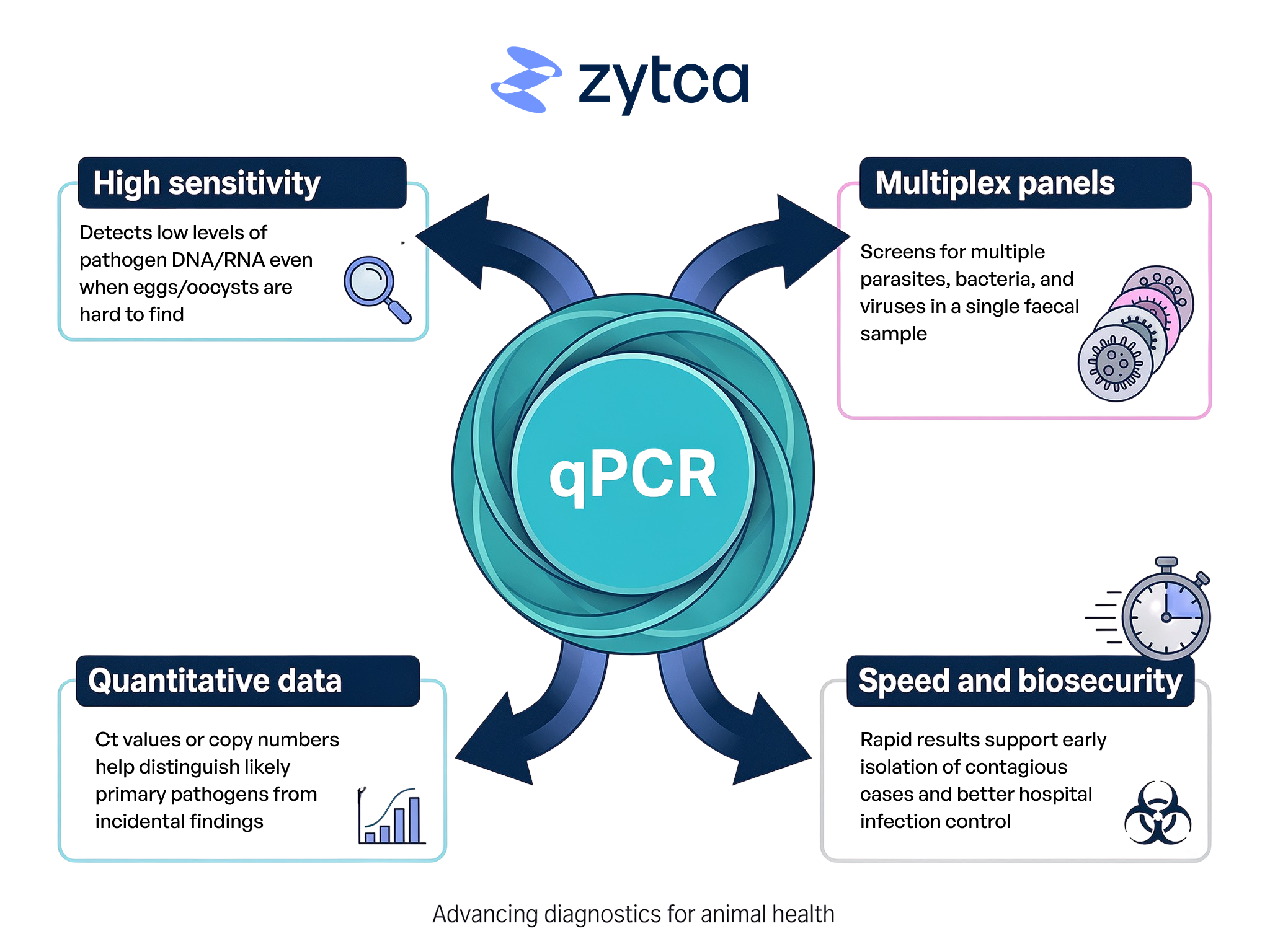
qPCR (Quantitative PCR) is PCR on steroids. Instead of simply copying DNA, it tracks the process in real-time with fluorescent probes. The machine literally watches the genetic material multiply, cycle by cycle.
Here’s why these matters in your day-to-day work:
-
You get more than yes/no → qPCR tells us how much pathogen is there.
-
Built-in quality checks → It confirms if the sample was collected and processed correctly.
-
Confidence in results → a clean “S-shaped” amplification curve means you can trust what you’re reporting to the vet (and the worried owner).
Quick Comparison

📈 What qPCR Looks Like
-
Strong positive: early rise, low Ct value.
-
Weak positive: later rise, high Ct value.
-
Negative: flat line.

🐕 Take-Home for Vet Nurses
Whether it’s parvovirus in a puppy, calicivirus in a kitten, or even emerging parasites, molecular tools help us detect infections earlier and manage them more effectively.
-
PCR is reliable but slow.
-
LAMP is quick but less trustworthy.
-
qPCR is both accurate and informative, giving you results you can act on with confidence.
Next time you send off that swab, you’ll know exactly what’s happening behind the scenes, and why qPCR is fast becoming the gold standard in veterinary diagnostics.