
Faecal testing is central to working out why a dog or cat has the clinical signs of diarrhoea as most infectious causes live in, or are shed through, the gut, and many cannot be reliably identified on clinical signs alone. Modern qPCR panels add further value by sensitively detecting and quantifying multiple pathogens in a single sample, helping clinicians connect test results to the individual animal’s history, signalment and disease severity.
Why faecal testing matters
- Diarrhoea has a long list of potential causes, including parasites, viruses, bacteria, dietary indiscretion and chronic enteropathies; clinical signs and routine blood tests rarely distinguish these reliably to make informed clinical decisions.
- Faecal testing helps identify treatable infectious agents such as Giardia, coccidia, nematodes, parvovirus and other viral and bacterial enteropathogens, allowing targeted therapy rather than empirical or “shotgun” treatment which may also contribute to antimicrobial resistance and/or a poor response to therapy.
- Recent surveillance data (Singleton et al., 2019) show that, in general practice, only a minority of dogs and cats with diarrhoea receive any faecal analysis, which risks missed diagnoses, inappropriate antibiotics and slower resolution of clinical signs
| Without faecal testing (Risks) | With faecal testing (Benefits) |
|---|---|
| Empirical or broad-spectrum antimicrobial or anthelmintic use | Identifies treatable parasites, bacterial and viral enteric pathogens |
| Missed zoonotic and herd-level pathogens (e.g. Giardia, Campylobacter) | Enables targeted therapy, strategic deworming and antimicrobial stewardship |
| Persistent diarrhoea, increased treatment costs and drug resistance | Supports biosecurity and infection control in homes, kennels, shelters and veterinary hospitals |
Insights from recent research
💡Retrospective studies of canine and feline faecal PCR panels report that one or more potential enteric pathogens are detected in the majority of diarrhoeic animals, and co‑infections are common.
💡Recent publications also highlight that organisms such as Clostridium perfringens or Campylobacter spp. may be present in both healthy and diarrhoeic animals, underlining the need to interpret positive results in light of clinical findings rather than in isolation.
💡Research on protozoa such as Giardia demonstrates that molecular methods, including real‑time PCR, are more sensitive than traditional antigen tests, improving detection in both acute and chronic diarrhoea cases.
How qPCR supports accurate diagnosis
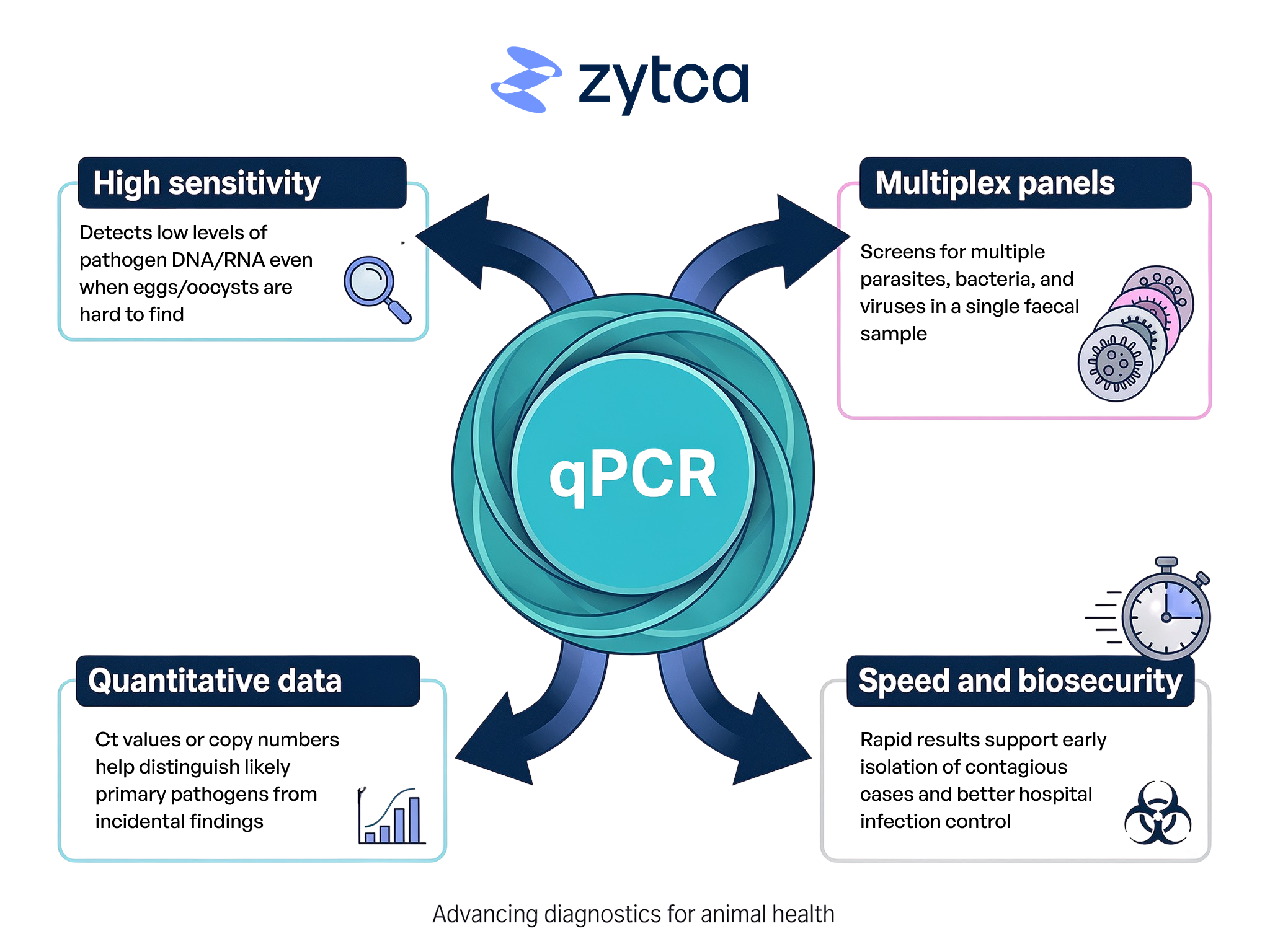
- qPCR (quantitative real‑time PCR) detects pathogen DNA or RNA at very low copy numbers and can be multiplexed to screen for panels of viruses, bacteria and parasites from a single faecal sample e.g., the UlfaQTM Canine Diarrhoea panel, Infectious Bacterial panel or Canine worm panel.
- The quantitative output (for example, Ct values or copy numbers) helps clinicians judge whether an organism is likely a primary pathogen, part of a mixed infection, or an incidental finding, especially when combined with signalment, vaccination status and disease course.
- As qPCR is rapid and highly sensitive, it can aid early isolation of contagious cases (such as parvovirus or feline panleukopenia) or zoonotic disease (e.g., Salmonella, E.coli, MRSA), reduce nosocomial spread, and guide more precise prognostic discussions with owners.
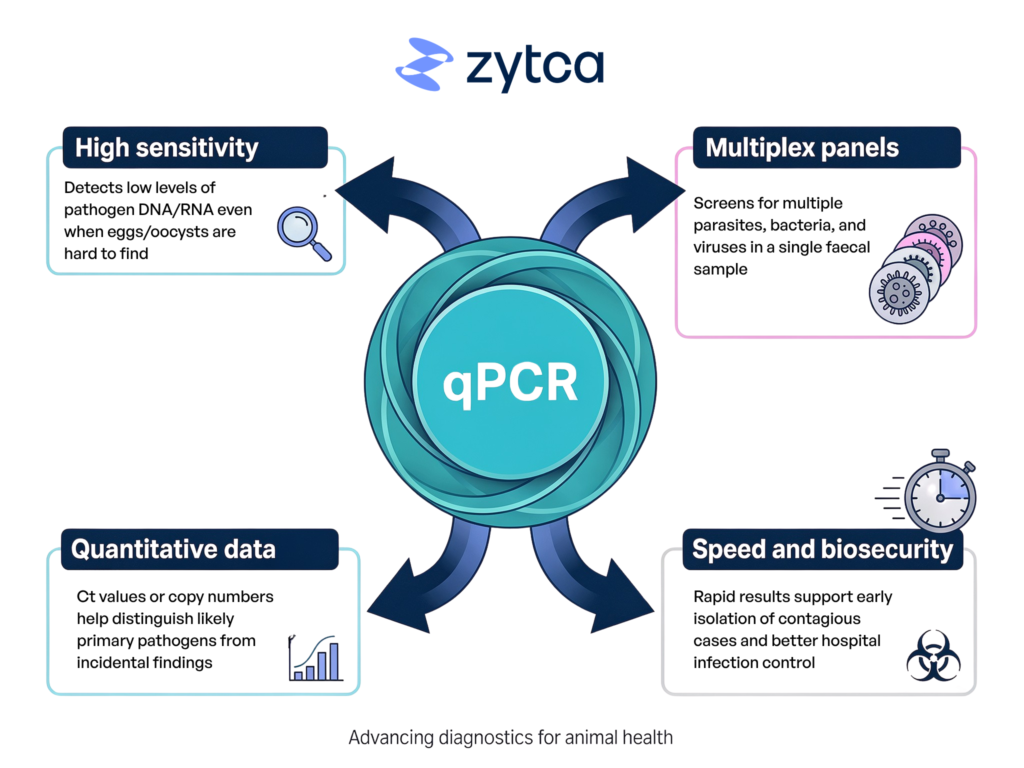
Figure 1. The benefits of qPCR analysis of faecal samples in patients with diarrhoea
Integrating qPCR into clinical workflow
In practice, faecal testing is most useful in puppies, kittens, severely affected animals, patients with chronic or recurrent diarrhoea, and multi‑pet households or shelters where infectious disease control is critical.
A rational approach is to combine traditional faecal flotation or antigen tests with targeted qPCR panels, then interpret results alongside diet history, deworming status, travel, environment and response to initial therapy.
Used thoughtfully, qPCR enhances, not replaces, clinical reasoning, helping veterinarians move from nonspecific symptomatic management to evidence‑based, pathogen‑directed care for dogs and cats with diarrhoea which can also reduce the likelihood of developing antimicrobial resistance and improved antibiotic stewardship.
For more information on qPCR and available test panels, please visit www.zytca.com