

Canine and feline lungworm: what UK owners need to know
Lungworm has become an important parasite in UK dogs and cats, and cases are being seen more commonly in general practice. Recent surveys and expert reviews confirm that both canine and feline lungworm infections are expanding across Europe and the UK, which means awareness and prevention, as well as accurate diagnosis, matter more than ever.
What is lungworm?
“Lungworm” is a catch‑all term for several worms that live in or around the lungs and blood vessels:
- In dogs, the main concern is Angiostrongylus vasorum (French heartworm), which lives in the heart and pulmonary arteries, and Crenosoma vulpis, which lives in the airways.
- In cats, the most common lungworm is Aelurostrongylus abstrusus, a metastrongyloid nematode that inhabits the small airways and is increasingly reported across Europe.
These parasites can damage the respiratory system and, in dogs, interfere with blood clotting, leading to serious illness or even sudden death in severe cases.
How do pets catch lungworm?
Lungworm has an indirect life cycle, using other animals as “middlemen” before reaching dogs or cats.
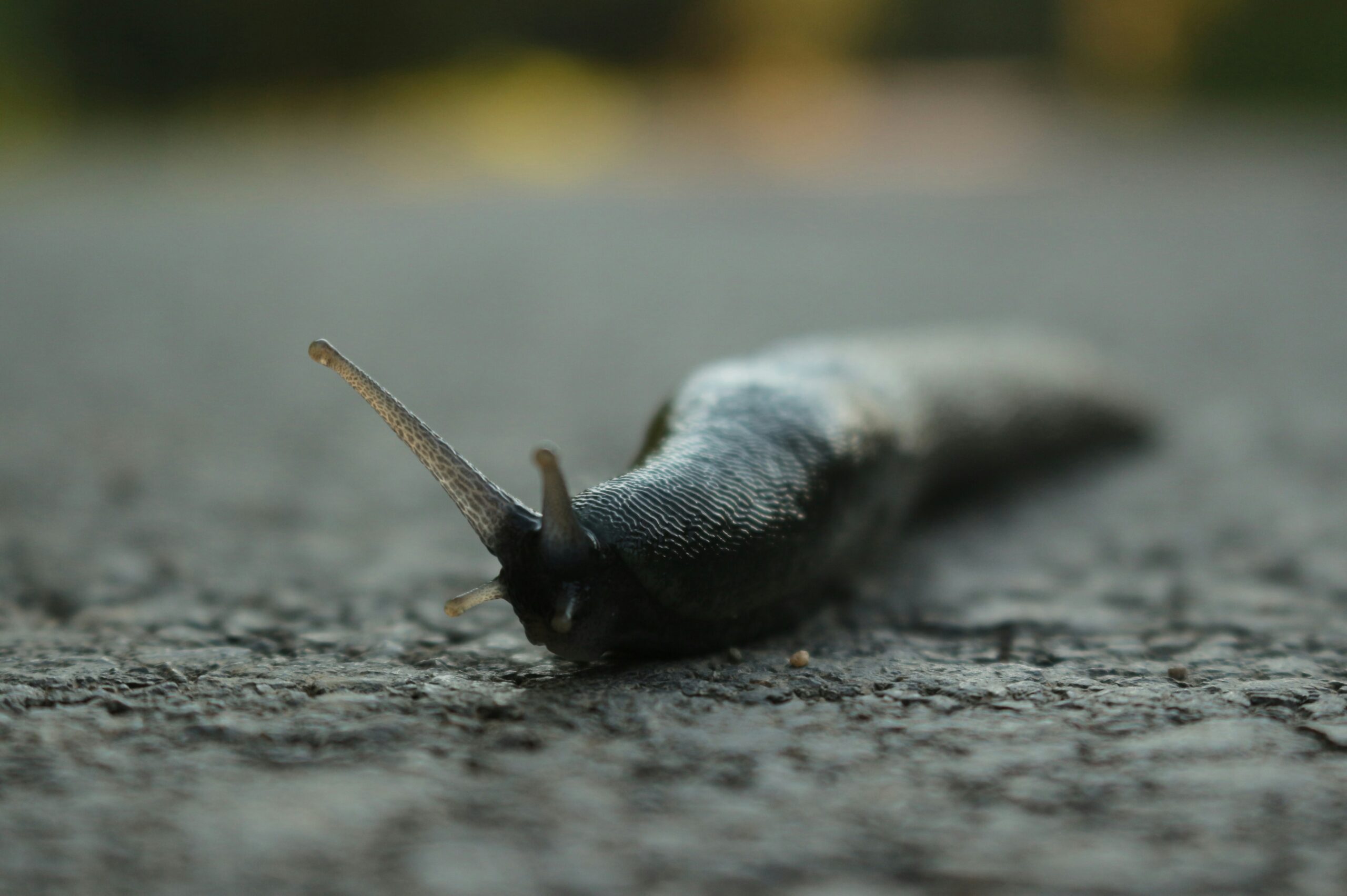
- Dogs are usually infected by eating slugs and snails, or ingesting their slime on grass, toys or chew sticks left outside; foxes act as an important wildlife reservoir.
- Cats typically become infected by hunting and eating small prey such as rodents and birds that carry Aelurostrongylus larvae.
Once swallowed, larvae migrate through the body to the lungs or major blood vessels, where they mature into adults and start producing more larvae that pass out in faeces, continuing the cycle.
How common is lungworm in the UK?
Lungworm used to be considered rare, but multiple data sources now show it is established and spreading.
- ESCCAP UK & Ireland report that Angiostrongylus vasorum prevalence in routine diagnostics has increased significantly in most UK regions, with some areas of the south‑east rising from 23.2% to over 50% positivity in certain test cohorts, and previously lungworm‑free northern regions now reporting cases.
- A UK postal survey of small animal practices demonstrated that A. vasorum has spread beyond its traditional foci in south‑west England and Wales, with cases now recorded across central and northern England and into Scotland.
- Recent European epidemiological work on canine angiostrongylosis and cardio‑pulmonary nematodes in cats highlights ongoing geographic expansion and the need for sustained surveillance.
Feline lungworm appears under‑diagnosed, but contemporary reviews suggest that Aelurostrongylus abstrusus is being identified more frequently and may reach high prevalences in some cat populations.
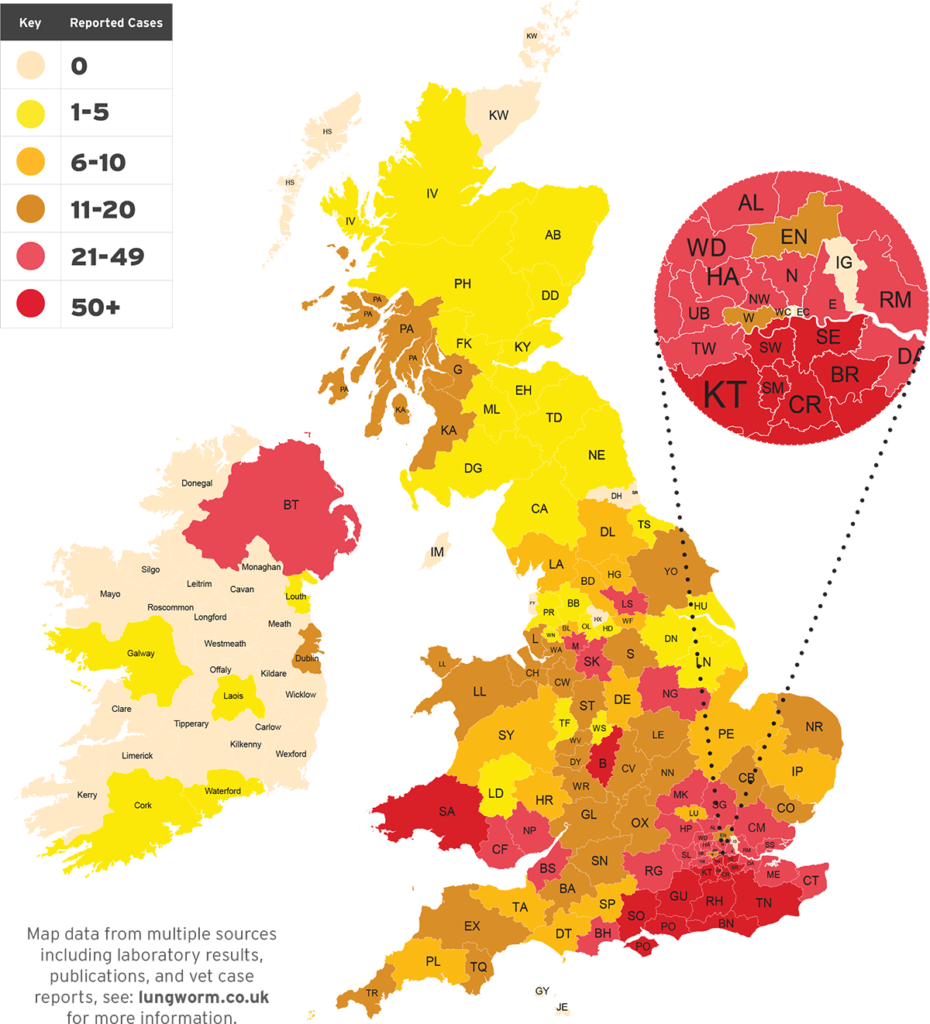
A geographic heatmap showing confirmed cases of canine lungworm, published in 2021 by the Vet Times (Taken from Lungworm post-lockdown – what’s the risk in your area?).
When do lungworm cases tend to peak?
Owners often ask if lungworm is a “summer problem”, but the pattern is more complex.
For dogs:
- Slugs and snails, which carry canine lungworm larvae, are active for much of the year in the UK’s mild, wet climate, so basic exposure risk is essentially year‑round.
- Slug activity typically increases in warm, wet conditions, with hatching in late winter and breeding peaks from late summer into autumn, which likely boosts environmental contamination with larvae.
- Because there is a lag between infection and the onset of clinical signs, some dogs infected in late summer or autumn may present with coughing or bleeding problems in winter or early spring.
For cats:
- Infection risk tracks hunting behaviour rather than slug activity, so outdoor cats that hunt rodents and birds are at risk throughout the year, with potential peaks when prey is abundant in warmer months.
ESCCAP and UK parasite forecast resources now emphasise that lungworm should be considered a year‑round risk in endemic regions, with seasonal peaks shaped by local climate and wildlife dynamics.
💡Signs of lungworm in dogs
Clinical presentations vary widely, from mild respiratory signs to severe, life‑threatening disease.
Possible signs include:
- Persistent or intermittent cough and reduced exercise tolerance.
- Fast or laboured breathing and respiratory distress.
- Unexplained bruising, bleeding from the nose or gums, blood in urine or stools, or prolonged bleeding from minor wounds due to coagulopathy.
- Neurological signs such as seizures or behaviour change if bleeding occurs within the central nervous system.
- Non‑specific signs like lethargy, weight loss and poor appetite. </aside>
A 2020 round‑table discussion published by Bourne et al., highlighted that increasing UK case numbers and highly variable clinical signs make a high index of suspicion essential in at‑risk dogs.
💡Signs of lungworm in cats
Cats with lungworm may show:
- Coughing, wheezing, or increased respiratory effort.
- Exercise intolerance and lethargy.
- Occasional sneezing or nasal discharge. </aside>
However, many infected cats remain asymptomatic or have subtle signs, and are only diagnosed when imaging or faecal testing is performed for another reason.
How is lungworm diagnosed?
Vets often combine several approaches to reach a diagnosis:
- History and examination to identify risk factors (slug/snail exposure, foxes, outdoor hunting, travel, regional endemicity).
- Blood tests, including in‑clinic antigen tests for A. vasorum and, in some settings, antibody assays.
- Faecal examination using methods like the Baermann technique to detect larvae in both dogs and cats.
- Imaging such as thoracic radiographs or CT to evaluate lung patterns and rule out other causes of respiratory disease.
ESCCAP guidance stresses that combining antigen testing with faecal examination increases sensitivity in suspected canine lungworm cases.
Diagnosis using qPCR
Quantitative PCR (qPCR) is increasingly used as a sensitive, species‑specific way to detect lungworm DNA in dogs and cats, even when larvae are shed intermittently or in low numbers. Unlike microscopy‑based faecal techniques, qPCR can pick up trace amounts of parasite DNA in samples such as faeces, bronchoalveolar lavage fluid, blood or pharyngeal swabs, reducing the risk of false negatives in clinically suspicious cases. Recent multiplex assays can differentiate several canine lungworm species in a single run with high sensitivity and 100% specificity, and similar PCR approaches for feline lungworm have outperformed classical methods, identifying infected cats that tested negative on Baermann tests alone. For clinicians, this means qPCR can support earlier, more confident diagnosis, guide targeted treatment and follow‑up, and generate robust surveillance data on which species are circulating and how lungworm risk is changing over time.
Treatment and prognosis
The good news is that lungworm is usually treatable when identified early.
- Several anthelmintic products with activity against canine and feline lungworm are available and feature in ESCCAP and UK deworming guidance, with monthly or risk‑based protocols advised in many endemic areas.
- Dogs with severe respiratory compromise or bleeding disorders may require hospitalisation, oxygen, blood products and intensive supportive care.
- Most animals treated promptly have a good prognosis, but delayed diagnosis in heavily infected dogs can lead to fatal outcomes.
Ongoing UK and European studies are aiming to refine our understanding of risk factors and optimise prevention strategies, reflecting the profession’s concern about this emerging parasite.
Preventing lungworm in UK pets
Prevention combines environmental care, lifestyle awareness and targeted worming.
For dogs:
- Use a vet‑recommended wormer that specifically covers lungworm, at an interval matched to your dog’s risk; ESCCAP and UK expert panels often advocate year‑round prophylaxis in known endemic regions.
- Avoid leaving toys, bowls and chews outside overnight where slugs and snails can contaminate them, and discourage deliberate slug or snail eating where possible.
- Clear faeces promptly to reduce environmental contamination and potential exposure for other dogs and wildlife.
For cats:
- Outdoor hunting cats may benefit from regular worming that includes coverage for Aelurostrongylus, especially in areas where feline lungworm has been documented.
- Vets are increasingly encouraged to use individualised, risk‑based deworming plans informed by ESCCAP schemes rather than blanket protocols.
REFERENCES:
Leal-Sousa B, Esteves-Guimarães J, Matos JI, Oliveira P, Lobo L, Silvestre-Ferreira AC, Soares CS, Carretón E, Morchón R, Fontes-Sousa AP, Montoya-Alonso JA. Epidemiological Mapping of Canine Angiostrongylosis in Portugal: Findings from a Nationwide Prevalence Survey. Vet Sci. 2025 Jul 8;12(7):647. doi: 10.3390/vetsci12070647. PMID: 40711307; PMCID: PMC12298115.
Traversa D, Di Cesare A. Cardio-Pulmonary Parasitic Nematodes Affecting Cats in Europe: Unraveling the Past, Depicting the Present, and Predicting the Future. Front Vet Sci. 2014 Oct 9;1:11. doi: 10.3389/fvets.2014.00011. PMID: 26664917; PMCID: PMC4668853.
Bourne, D., ELsheikha H., et al Lungworm: A roundtable discussion. Parasitology. 2020 (25) 2. https://doi.org/10.12968/coan.2020.25.0019
4ide6ec4_0988_ESCCAP_UK_Diagnostic_Recommendations__Canine_lungworm_v2.pdf